


Viewing 55 - 60 out of 90

Patient Education
Skin Conditions
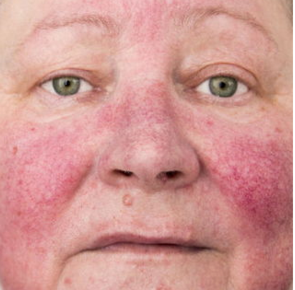
Rosacea
Rosacea is a common skin condition which presents with redness of the face, small visible blood vessels on the nose and cheeks, and pimple-like breakouts. Rosacea can also affect the eyes (ocular rosacea) presenting with symptoms such as dryness, redness, burning, and itching of the eyes. Rosacea most
Skin Growths
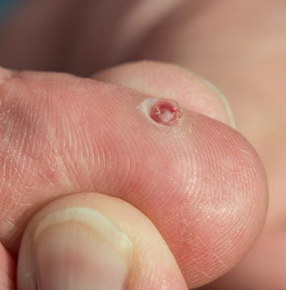
Pyogenic Granuloma
Pyogenic granulomas are benign vascular growths that grow rapidly and frequently present as raised, red lesions that bleed with minor trauma. These lesions are most commonly found on the face or fingers, but can also develop on other parts of the skin or oral mucosa (lips or gums). Children, teenagers,

Skin Conditions
Pseudofolliculitis Barbae
Pseudofolliculitis barbae is a chronic inflammatory condition that predominantly affects Black men. Affected individuals develop pink papules and pustules around the hair follicles on the face and neck due to shaving. As the papules and pustules resolve, it can result in hyperpigmentation (darker discoloration)

Skin Conditions
Prurigo Nodularis
Prurigo nodularis is a condition where repeated scratching or picking at a site creates itchy, raised, hard bumps on the skin. Prurigo nodularis can appear anywhere on the body, but is most commonly found on the arms, legs, trunk, or buttocks. The condition is more common in older individuals (over 50),
Skin Conditions
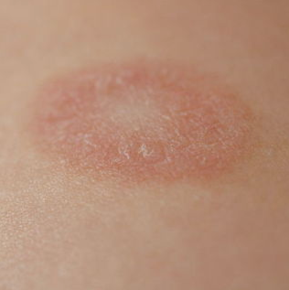
Pityriasis Rosea
Pityriasis rosea is a common, self-limited rash that typically begins with the appearance of a solitary, enlarging, circular, pink, scaly patch - known as the “herald patch”. In the following 1-2 weeks, numerous smaller, round to oval, pink, scaly patches appear, typically on the trunk in a Christmas-tree-like

Skin Conditions
Perioral Dermatitis
Perioral dermatitis is a type of rash that typically presents as pink papules (small red bumps) and scaling around the mouth. In addition to affecting the area around the mouth, it can also appear around the nose or eyes and can be referred to as periorificial dermatitis. The exact cause of perioral

Office Hours
Monday
08:30 am - 04:00 pm
Tuesday
09:00 am - 04:00 pm
Wednesday
08:30 am - 04:00 pm
Thuirsday
08:30 am - 04:00 pm
Friday
Closed
Weekend
Closed
Office Hours
Monday
08:30 am - 04:00 pm
Tuesday
09:00 am - 04:00 pm
Wednesday
08:30 am - 04:00 pm
Thursday
08:30 am - 04:00 pm
Friday
Closed
Weekend
Closed